This is part two in a series from our trip to Israel and Palestine last January. I strongly recommend reading them in order! You can read Israel Pt.1 by clicking here.
Have you met them? That person, those people, the ones we are talking about now. You know them. The others. The people who aren’t like us. The villains. The bad guys. The others.
When I was fifteen, one of my favorite things to do was to try and connect people who didn’t “go” together by being friends with anyone and everyone. One of my favorite friendship pairings was a “tell it how it is” baseball player named Mike and a long haired skinny jean wearing artist we affectionately referred to as the Beast. A couple years into the friendship, I remember hearing them share that they had never expected to be friends. “I thought you were a jock”… “I thought you were one of those weird art-is-life people”… But here they were, connecting, relating, in a friendship, all because they took a chance. Relationship changes things. The them, the other, becomes a friend. Relationships- especially with those who seem different from us- can change the way we see one another.
In the absence of relationship, it’s easy to assume the worst in people. As I consider my life (or scroll through my news feed), I find myself making assumptions or tiny judgments about people all the time. I find myself giving into stereotypes, quickly dismissing the feelings and experiences that challenge my predispositions. Too often, I forget the power of listening.
One of the unique aspects of our trip to Israel and Palestine was the opportunity to visit places that foreigners don’t often go. Our hope was to learn from the local population about their experiences living in Israel and the West Bank. For us, this meant spending time with people who found themselves on varying sides of the conflict, and many who are simply caught in the middle. We met with Orthodox and Secular Jews. We met with Muslim and Christian Palestinians. Meeting people with different experiences and perspectives was helpful in dismantling stereotypes and prejudices.
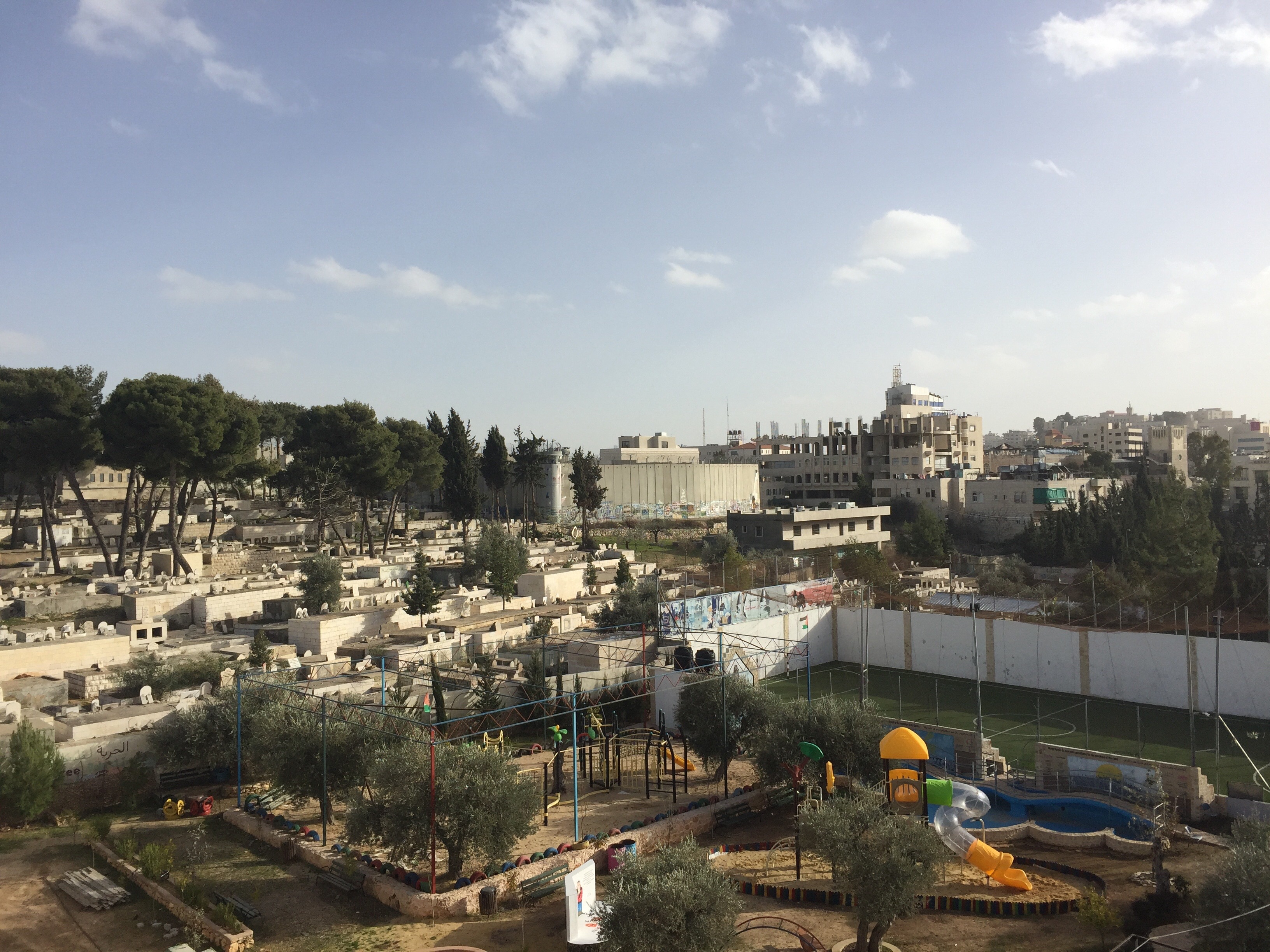
This is Aida Refugee Camp. When we heard we were going to a refugee camp, we expected to see temporary housing like tents or shelters. But this camp has been here 67 years. To give perspective, that’s my dad’s age- his entire lifetime. Lets say my dad had been born in Aida. My grandpa and great grandpa would have been forced to Aida, and taken him with him. My sisters and I, and my nieces and nephews would have grown up here- that’s 5 generations. Over time, Aida has been build up with playgrounds and multistory buildings. The camp sits in the shadow of a security wall and Israeli sniper towers. For most Palestinian refugees in the camp, the only interaction they have with Israeli people is with Israeli soldiers. This seems to only further divide the distance between people.
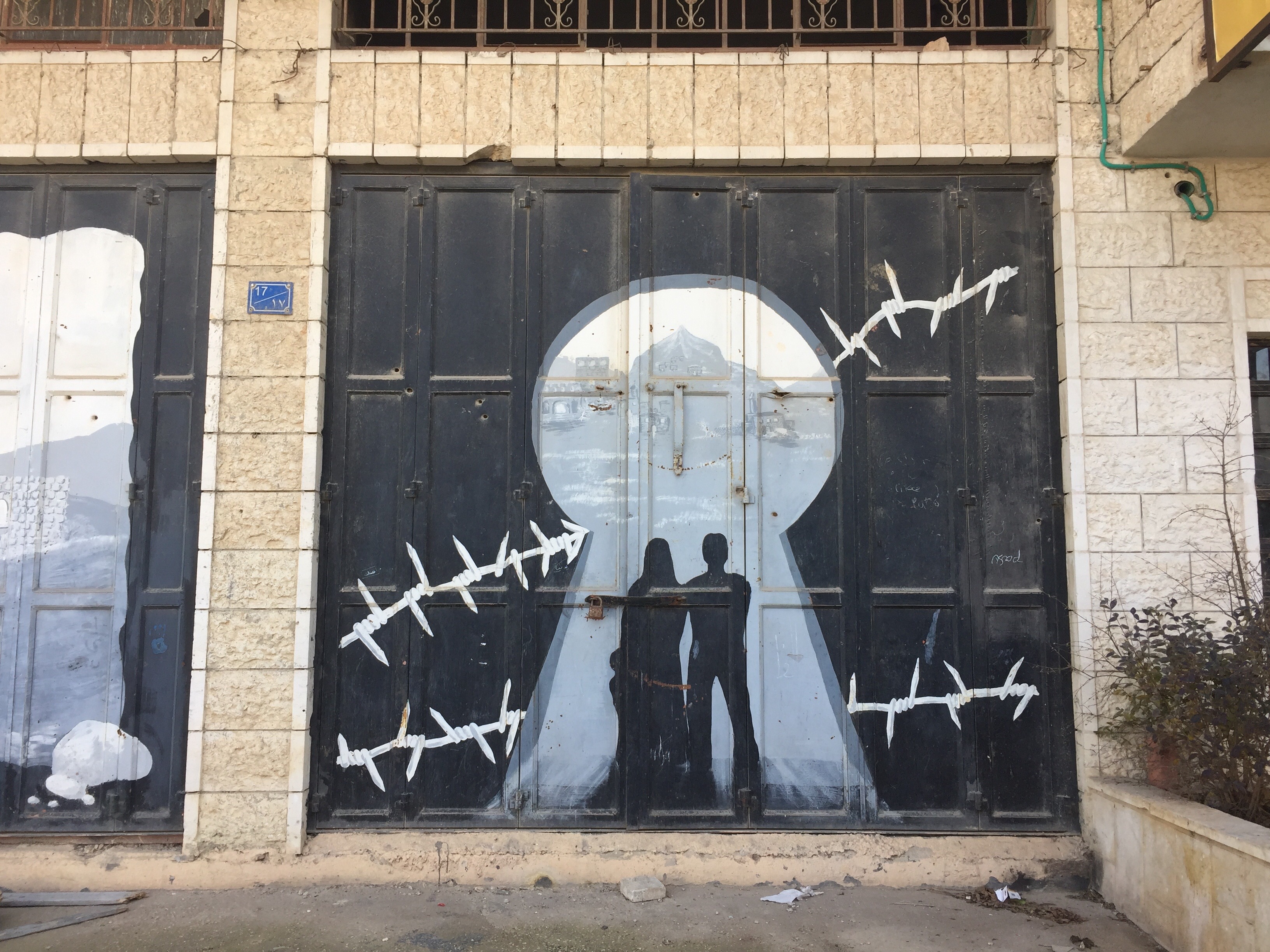
Many Palestinians still keep the keys to their homes, hoping that one day they will be able to return. For this reason, keys have become a symbol. The longing for home is more than a desire to have a place to lay their head, but a resounding hope that they would one day be able to return to the land that they were exiled from. This is, to me, the great irony of this conflict. A group of people, exiled from their land, return and exile another group from their land. My prayer is for reconciliation. That somehow, there would be room for everyone.


Within the camp is a community center for kids living in the camp to engage in creative outlets like painting, photography, music, writing, and gardening. The picture above is of a rooftop garden. One of the most impactful moments for me was to see tear gas canisters re-purposed to grow strawberries. The tear gas canisters had been leftover from security raids by Israeli soldiers. Upon a closer look, we realized that the canisters were made in the United States. Whether we realize it or not, we are implicated in this conflict simply by being Americans. A tear gas canister made in the USA, launched by Israeli soldiers, and re-purposed to grow strawberries by Muslim Palestinian refugees. It was a beautiful picture of restoration in the midst of brokenness.
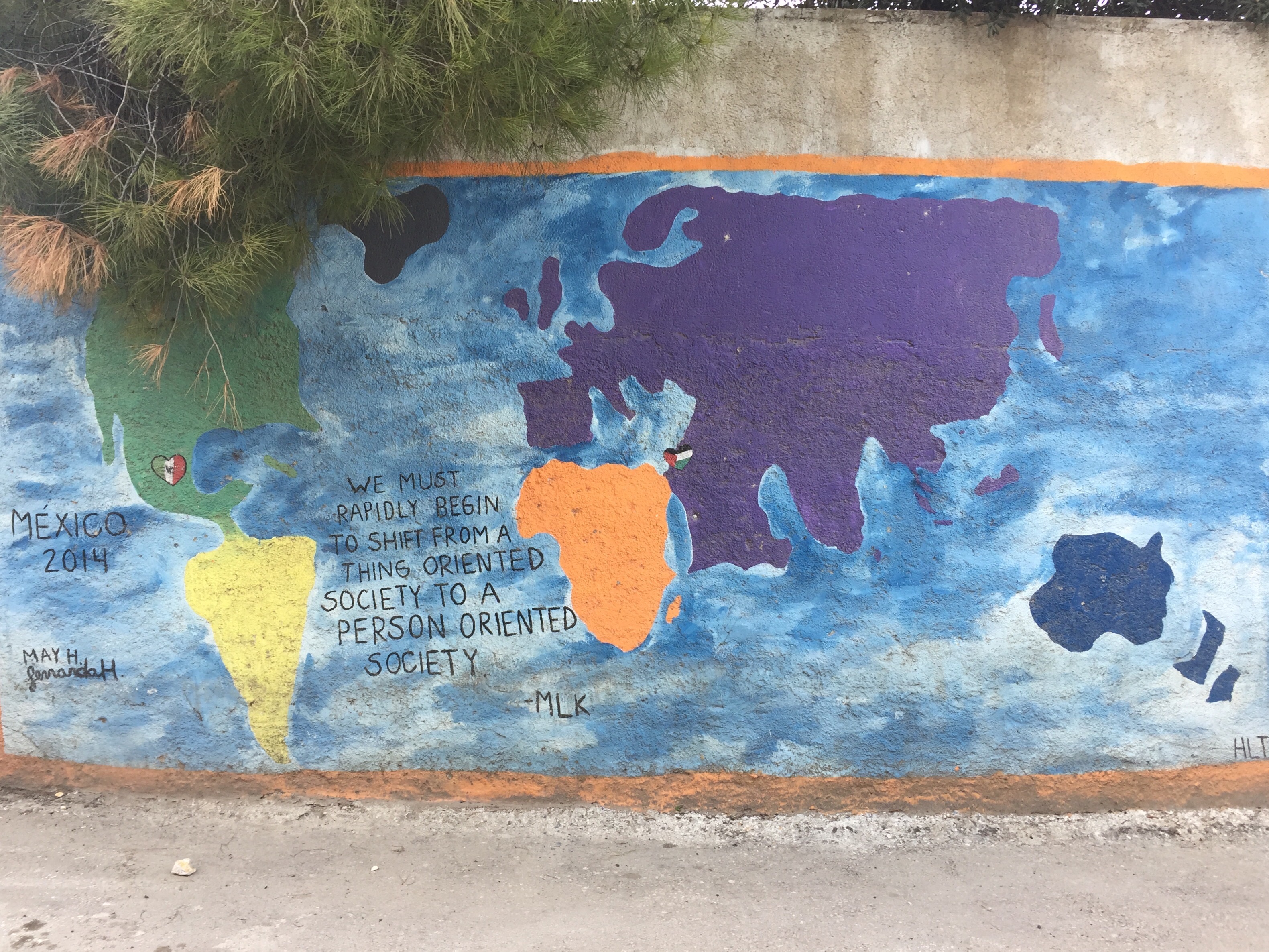
One of the murals in the camp. There are different artistic expressions throughout, some painted by locals and others by international groups who visit. Many foreign groups paint the security wall, but refugees in the camp often refuse to beautify the wall, as it is to them a symbol of oppression and injustice. This mural includes a quote from Martin Luther King, “We must rapidly begin to shift from a thing oriented society to a person oriented society.”
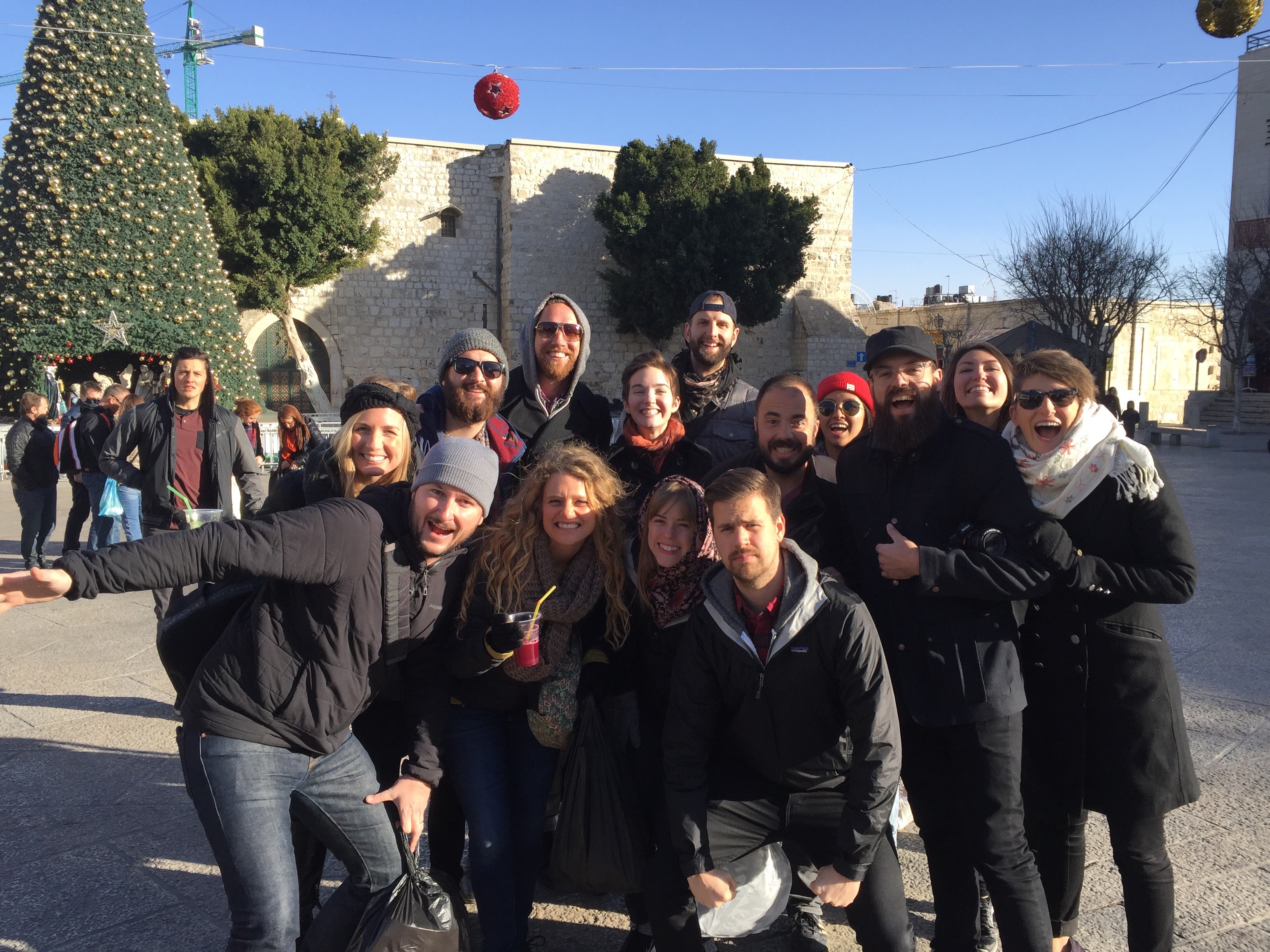
Some of our team in Bethlehem! Love these people!

I love this depiction of the last supper at the Diyar Consortium in Bethlehem. Diyar is led by a Christian Palestinian Pastor named Mitri Raheb. He was an amazing servant of Jesus and of his community, advocating for the least of these in his community. The Diyar focuses on creating culture through education for Palestinians. They follow Jesus in bringing abundant life to their community. To learn more visit their website here.

Falafel straight out of the fryer from a street stall in Bethlehem. I had some of the best food of my life on this trip!

They are everywhere… sort of.
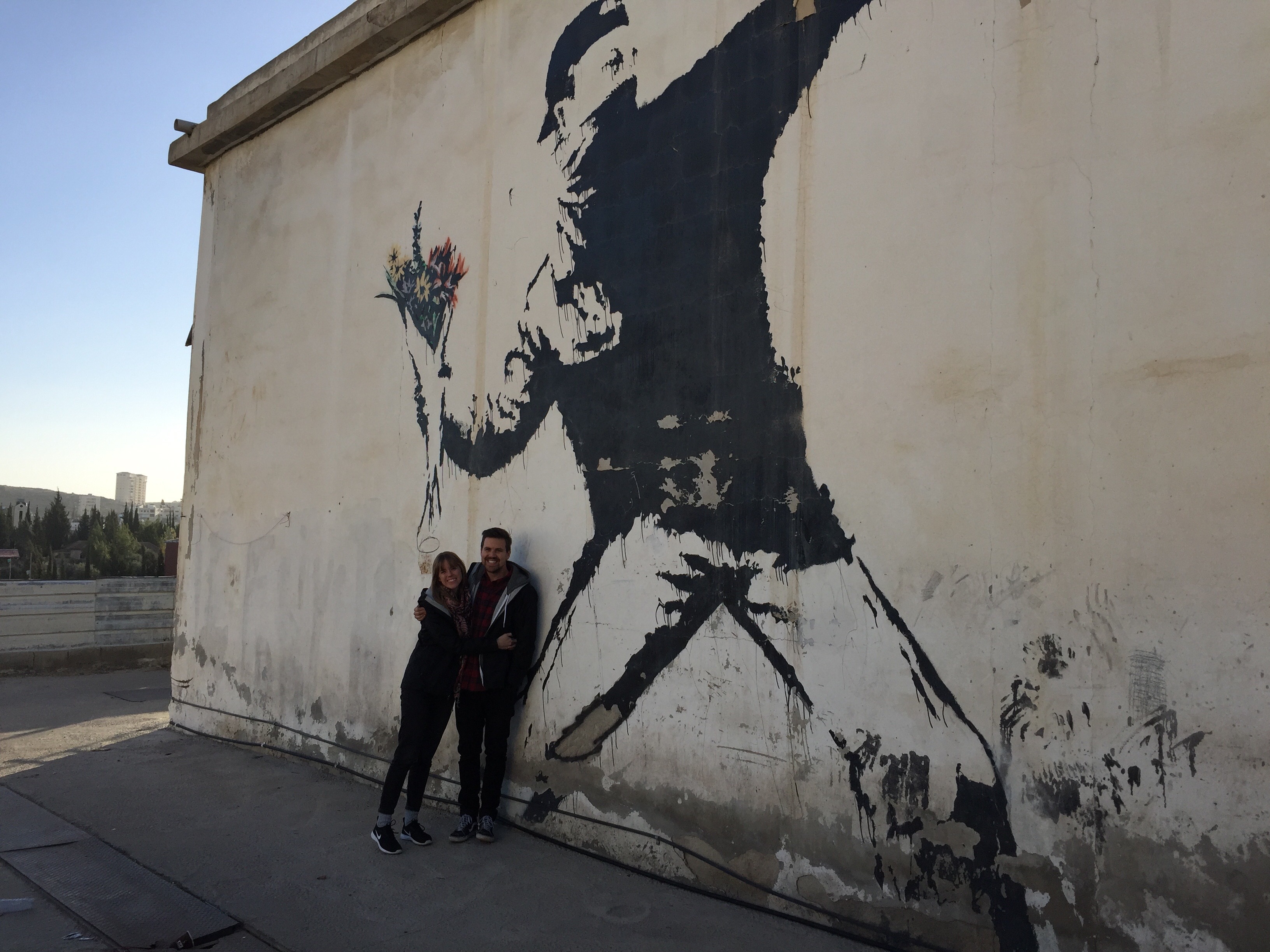
A Banksy mural on the wall of a car wash gas station in Bethlehem. Throw flowers, not grenades. Blessed are the peacemakers for they will be called children of God.
 shake the earth