After three posts chronicling the Uganda portion of our trip, we wanted to post about our time in Israel as well. Like Uganda, these posts will be photo centered, as I think pictures are a great way to give context to the stories we have been sharing with many of you. However, these pictures only serve as a small window into the people and places we encountered. My hope is that these posts serve as an entry point into real in-person conversation(s) with you. In fact, this is one of the reasons I am opting into blogging. For me, it is a springboard into a conversation, an opportunity to get us into a living room, coffee shop, or any place where (good) food is served to share, discuss, and learn from one another.
Another quick note- because the Holy Land is full of history, some of our pictures may make it seem like we were simply touring the Holy Land. In some sense this is true, we spent time in places where Jesus walked, talked, and ministered (and in a certain sense we toured Uganda as well). But this trip involved so much more. This was an exploratory trip, so one of our governing questions was “God, what are you up to, and where are you inviting us to join in?” For this reason, the primary orientation was to learn- the history (as my friend Greg put it, “there are places in the world that are more than 200 years old”), the modern reality (both in terms of conflict and efforts for peace), and the people who call this place home.
In our effort to learn about the reality on the ground and to respond to the presence of a God who is always working, we anchored ourselves in the Sermon on the Mount (Matthew 5-7). My belief is that the counter-cultural way of life that Jesus proposed was just as relevant then as it is today. One of the biggest things I am learning is that the reality of conflict can be complex. As one Rabbi we met said, “anyone who claims that this conflict is simple, simply doesn’t understand this conflict”. When I consider various conflicts at home, I am enamored by the complexities- there are always multiple narratives, histories, and imported baggage. In my experience, there can also be loud voices, closed ears, and solutions that prefer the self while neglecting the other. Too often we fuel our own ego while de-personifying those with whom we disagree. I am as guilty of this as anyone.
Simultaneously I learned that the way of Jesus is simple. It is costly, but simple. His yoke is easy and his burden is light, but taking on his yoke means laying down our own. Staying in step with him means we don’t rush ahead or fall behind, but travel at the pace of Jesus, and (even more challenging) to his destination. His kingdom is one where the least are the greatest, the weak are made strong, and the mourners will be comforted. The prince of peace has enlisted us into his army of peacemakers. Armed not with swords, but with crosses. His way is simple, but it will cost us much. Blessed are the peacemakers, for they will be called children of God.
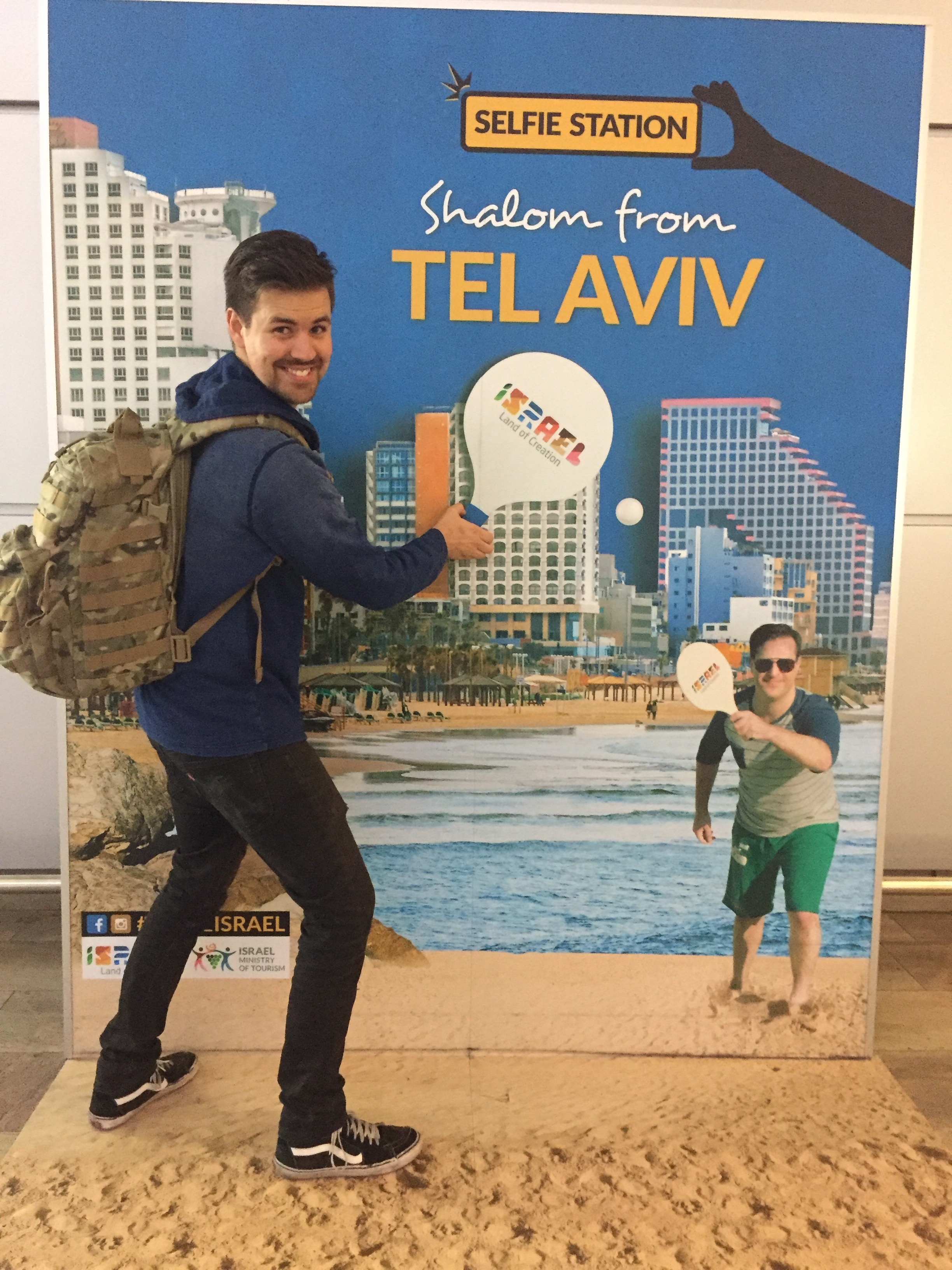
First things first, we hit the beach! (Not really) I added this picture from the airport to emphasize that Tel Aviv is a modern city in every sense of the word. I also think (hopefully I am not being presumptuous here) that the Selfie is probably the single greatest American export of my generation.
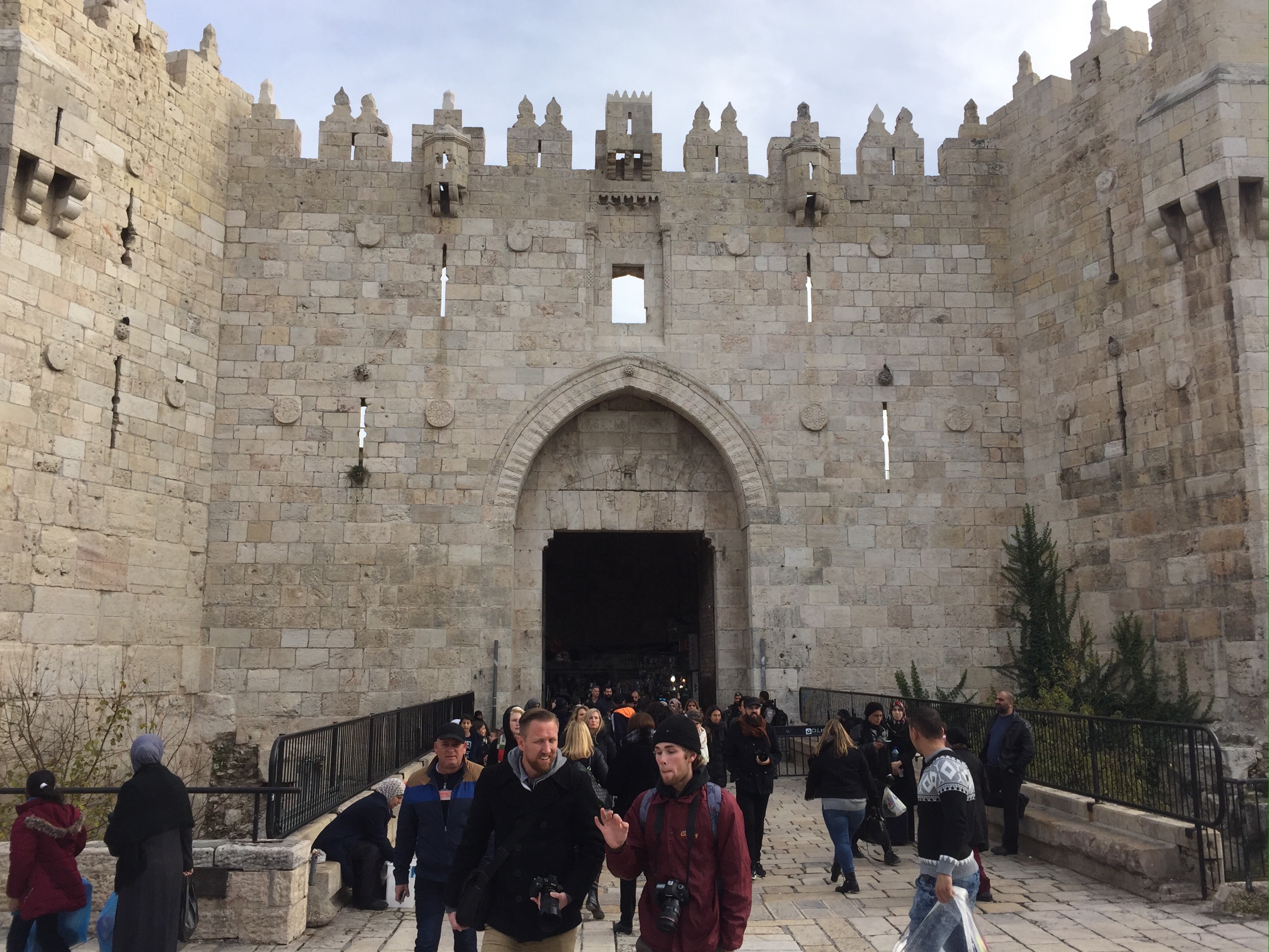
One of the entrances into the Old City of Jerusalem called the Damascus Gate. There are multiple entrances to the city similar to this one. This gate in particular is a site where there have been instances of violence against Jewish people.
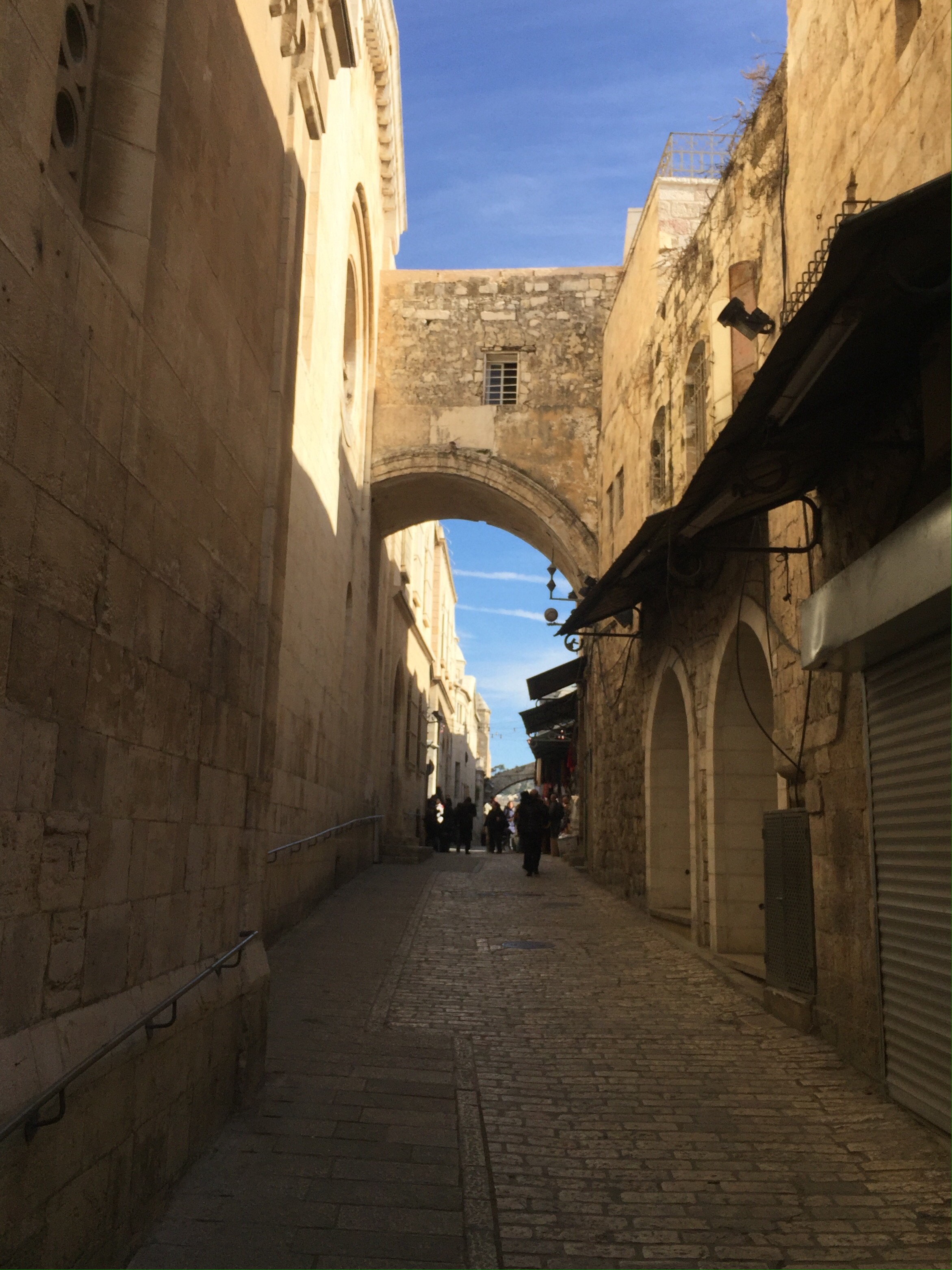
This is on the Via Dolorosa, the route that Jesus is believed to have walked on his way to the crucifixion. The archway above was built in 138 AD, which reminds us of the deep history of this place.

The Wailing Wall. Jewish people pray at this wall because just on the other side is where the Temple, and specifically the Holy of Holies, was located before it was destroyed. There are two areas for prayer, one for men and one for women. People often put their hands on the wall as they pray. Some people cry as they pray or sit and read the Torah. Others write prayers on small pieces of paper and put them in cracks between the stones. The overwhelming longing is that the temple would be rebuilt here.
If you look closely, the different stones (small at the top, and larger below) signify the different time periods in which the wall was built. Throughout history, Jerusalem has been destroyed and rebuilt multiple times. To quickly rebuild the city in the face of various conflicts, the city has been built on top of its own ruins. For this reason, there is constantly more history being unearthed through ongoing excavations.

The Dome of the Rock, a Muslim Mosque and Holy Site. It is believed by Jews to be the place where Abraham attempted to sacrifice Issac. It is an area that holds significance for Muslims, Jews, and Christians, which adds a religious element to the tension between peoples.

This is one of two proposed sites for the tomb of Jesus. They added a door so they can close it at night because the original stone covering the door was rolled away (sorry, I couldn’t resist).
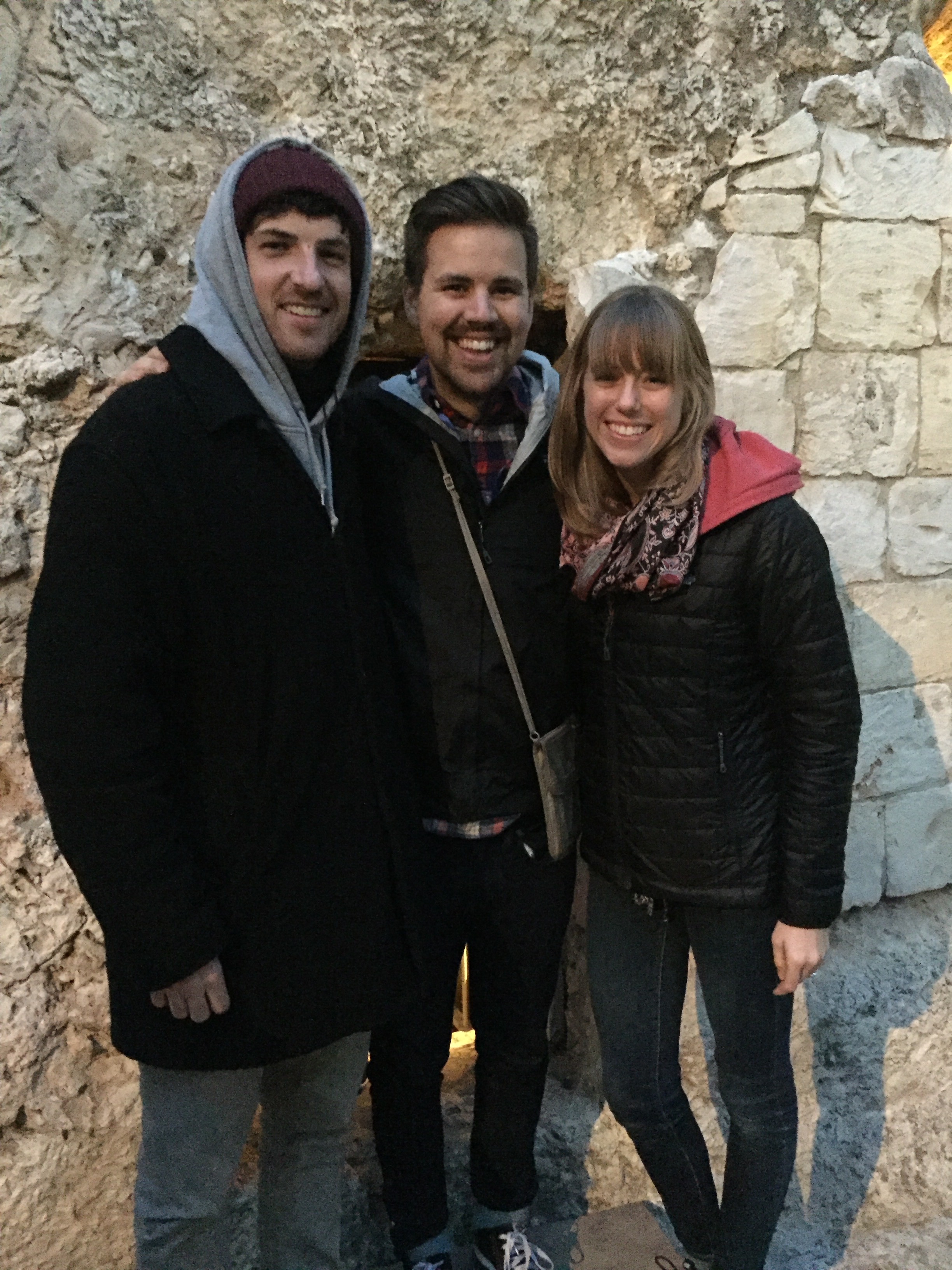
One of the unexpected things that happened, was that I got to connect with my longtime friend (and at onetime roommate) Christian! He had been travelling around Europe and felt like God led him to Israel. We got to connect with him, and he lent a prayerful perspective on the spiritual climate of the area. He has been wrestling with some of the complexities of the conflict, and felt like we were an answer to prayer for him, because-while we didn’t have many answers- we were able to affirm a lot of what he was seeing and experiencing. Like at home, one of the challenges to loving people, is that we are tempted to turn a blind eye to people who are experiencing hardship. It becomes easy to dismiss and even ignore people in our communities who are struggling, because we look for answers at a distance rather than engage with people themselves, to hear and learn from them. I admire Christian for seeking to follow Jesus wherever he leads, and for his effort in trying to love everyone, everywhere, all the time.

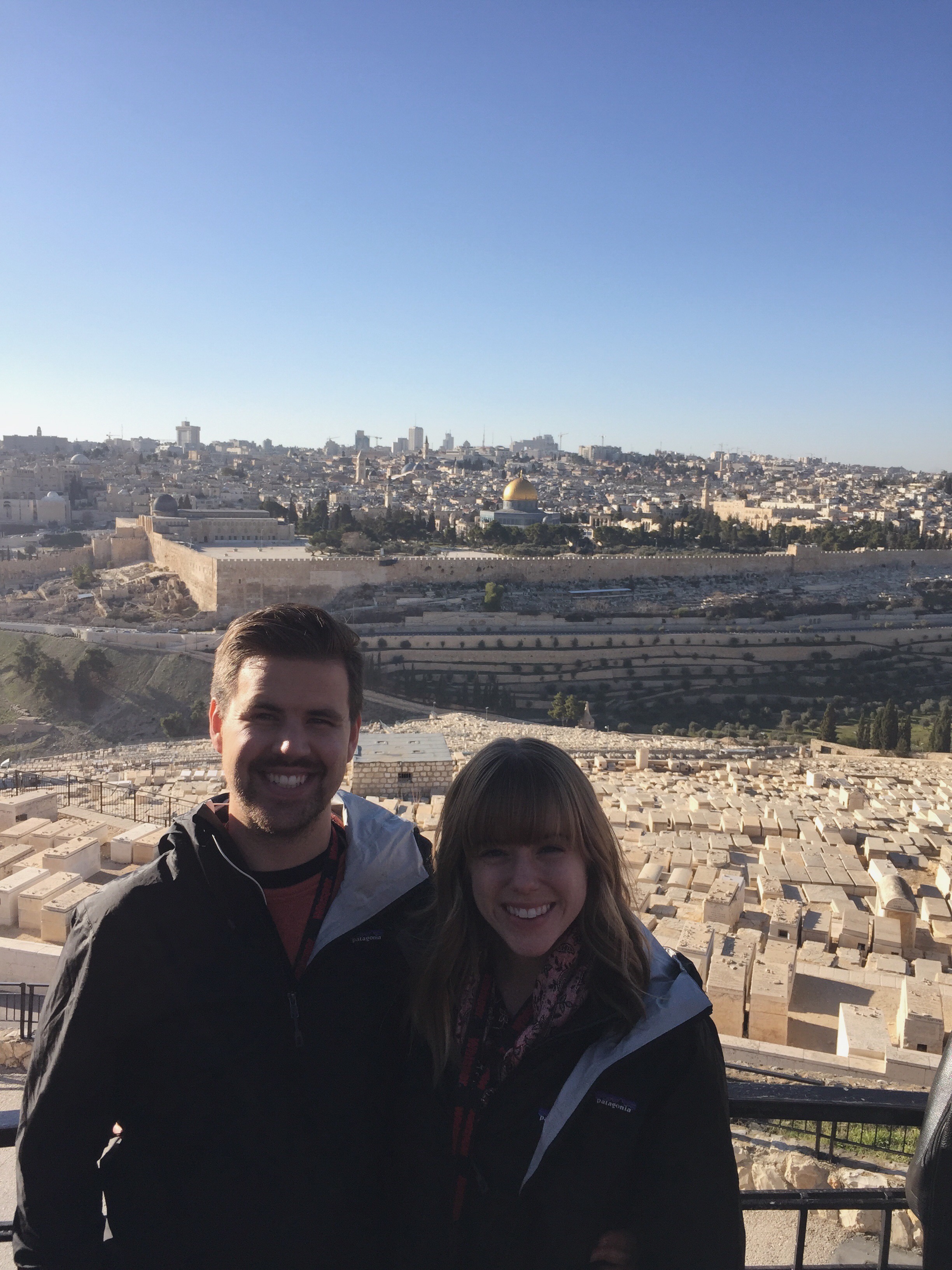
A view of the Old City from on top of the Mount of Olives.
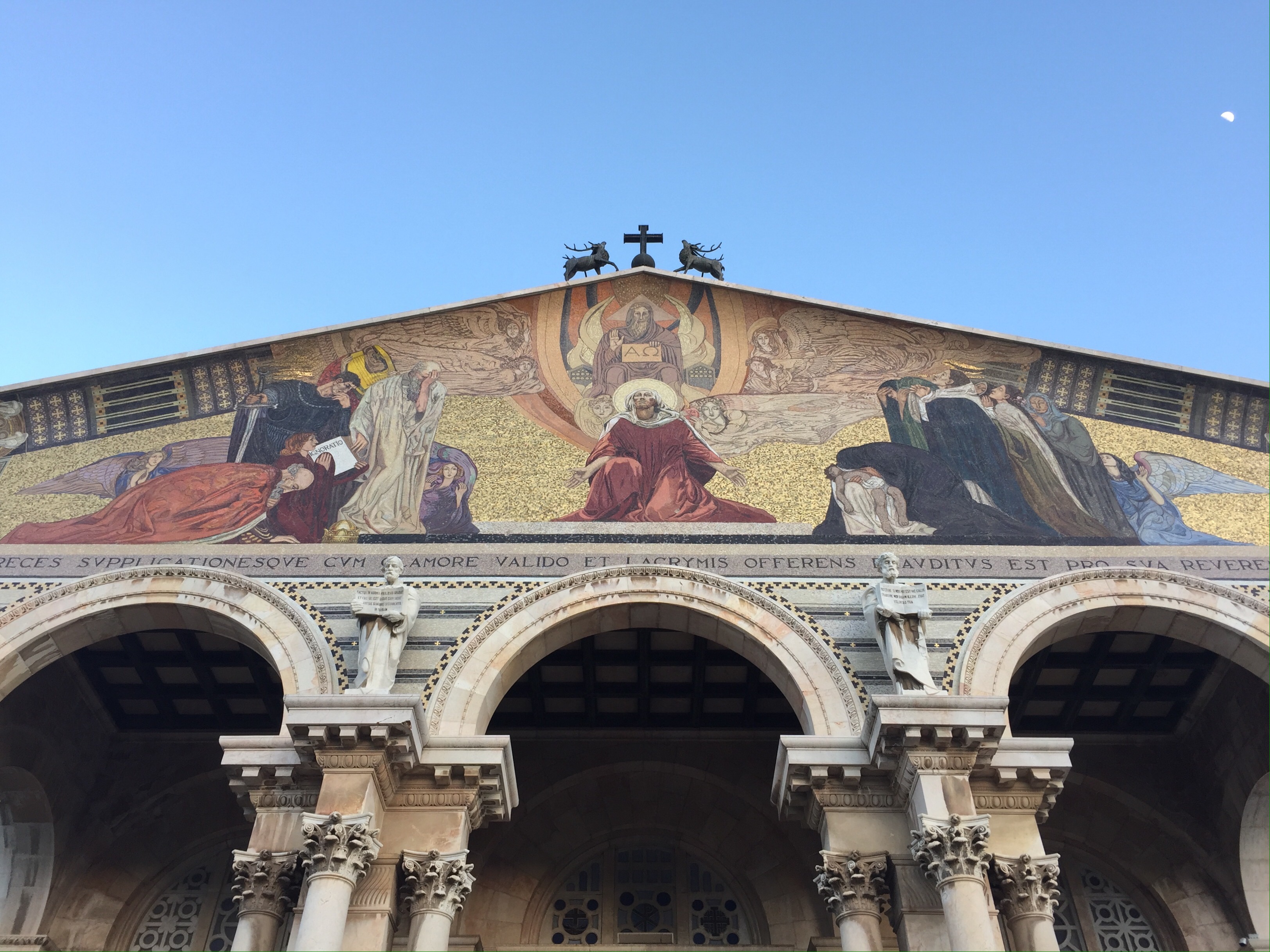
One of my favorite churches called Church of All Nations, located on the top of the Mount of Olives.

I am including this one because I am a Bible nerd. This is the Kidron Valley. Near the upper center of the photo is where Gehenna is located. During Canaanite times, this was a place where child sacrifices would be made to the god Moloch. By the first century, this became the place outside the city where trash was burned. The direct translation of Gehenna is Hell. So when Jesus is talking about hell, there is an actual image for his hearers to grapple with, a place of darkness and disgust at the time of his speaking.
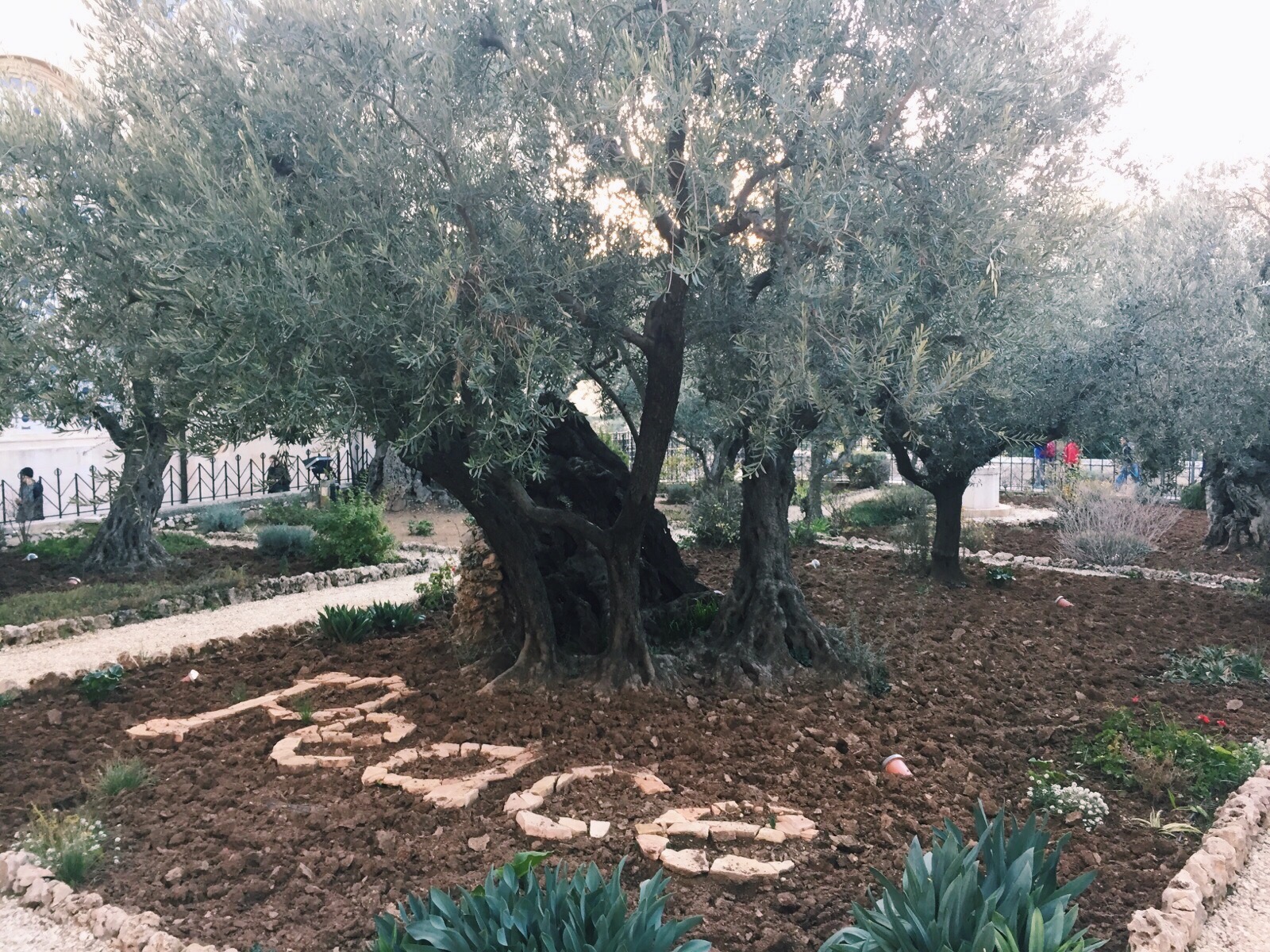
The last image for this post is of an olive tree near the garden of Gethsemane at the Mount of Olives. We learned that olive trees need to be watered for two years in order to grow, and after that they no longer need to be watered. It takes about 10 years for an olive tree to bear fruit. In our instant culture, the olive tree serves as a reminder that many good things aren’t instant. They take time.
The rocks below the tree are arranged to read Peace. In the place where Jesus was betrayed by one of his closest followers, in the place where Jesus commanded Peter to put away his sword, in a place where Jesus cried out to the Father “not my will, but yours be done”, I wonder what it means to be a peacemaker. I wonder what it means to follow the Prince of Peace wherever he is leading.
 shake the earth